
ISO 10993-1 Has Been Updated. Is Your Company Ready?
Download Sobel’s free e-book and understand what changes in the biological evaluation of medical devices — and how to align your processes with the new international requirements.
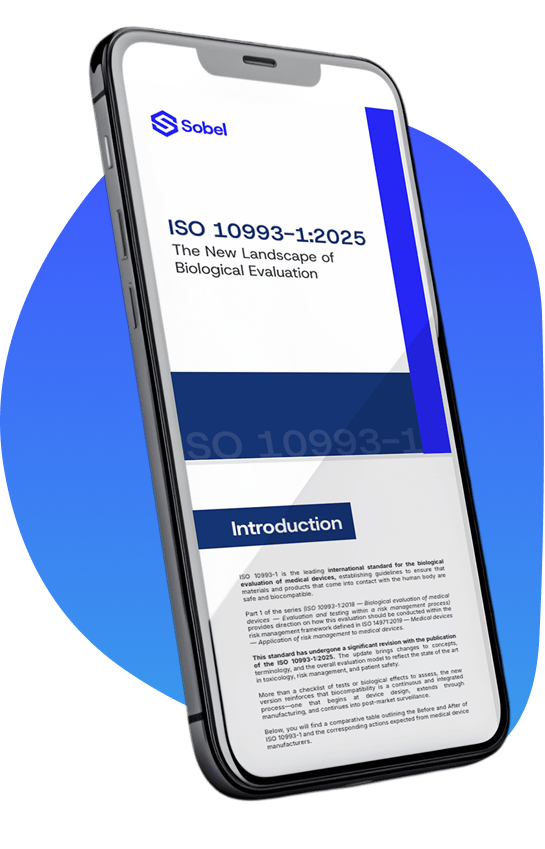
ISO 10993-1 Biocompatibility Requirements Are Changing!
The new ISO 10993-1:2025 edition marks a major shift in biological safety and risk management for medical devices.
It introduces significant updates — from integration with ISO 14971, to a redesigned contact categorization, increased emphasis on bioaccumulation, and a strong push for animal testing alternatives using 3Rs and NAMs (New Approach Methodologies).
With so many changes, understanding every requirement can take time. That’s why Sobel developed a practical and objective guide to help you quickly understand what truly matters — and how to prepare.
- In this free ISO 10993-1:2025 biocompatibility guide, you will find:
- A practical summary of ISO 10993-1 and its major updates
- A clear Before × After × Expected Action comparison for manufacturers
- Guidance to update your BEPs (Biological Evaluation Plans) and BERs (Biological Evaluation Reports) to the new structure
Who Should Read This Guide
This material is essential for professionals and organizations working with:
Medical devices, in vitro diagnostics (IVDs), dental devices, and related technologies
R&D, Quality, and Regulatory Affairs teams
Manufacturers exporting to highly regulated markets
Health-tech and med-tech startups
Sobel Supports Your ISO 10993 Update
This guide was developed by Sobel’s Human Safety specialists — experts who work daily with the practical application of ISO 10993-1 in real product development.
With the same technical expertise, our team supports companies in achieving full compliance with customized, end-to-end solutions:

Gap Analysis:
BEP – Biological Evaluation Plan:
BER – Biological Evaluation Report:
Technical training:
We work with scientific rigor, transparency, and continuous regulatory monitoring to ensure your company is fully prepared for the new biocompatibility landscape.
Download the free e-book “ISO 10993-1:2025 – The New Landscape of Biological Evaluation”

About Sobel
Our specialists bring more than 20 years of experience in regulatory affairs, biological safety, and biocompatibility. We are a trusted partner for medical device manufacturers seeking compliance with international standards such as ISO 10993-1 and ISO 14971.
Our mission is to combine science, strategy, and compliance to help companies ensure safety and accelerate global market access.
Download the Free ISO 10993-1:2025 Guide Now
Compliance with ISO 10993-1:2025 is essential for marketing medical devices in major global markets.
Make sure your product remains compliant by staying informed. Download the free e-book and understand exactly what changes in the new biocompatibility edition of ISO 10993-1:2025!