When it comes to commercializing medical devices in the European market, obtaining the MDR CE Mark is one of the first and most important steps.
This marking appears on millions of products sold across the European Union (EU) and indicates that a device complies with legal requirements related to safety, performance, and quality.
For manufacturers based outside the EU that intend to export their products to Europe, understanding the MDR CE Mark certification process is essential.
The pathway involves specific regulatory rules, risk classification, and, in many cases, the participation of European conformity assessment organizations known as Notified Bodies.
Important note: In this article, we use the term “CE Mark certification” because it is widely searched by manufacturers. From a regulatory perspective, CE marking is the conformity assessment process allowing manufacturers to declare compliance with MDR requirements.
Below, you will find a clear explanation of the MDR CE Mark and its importance in the medical device industry. You will also learn how the European regulatory framework works and what steps are required to successfully obtain CE marking.
If you are planning to bring your medical devices to the European market, this guide is for you.
What Is CE Mark Certification and Why Is It Important?
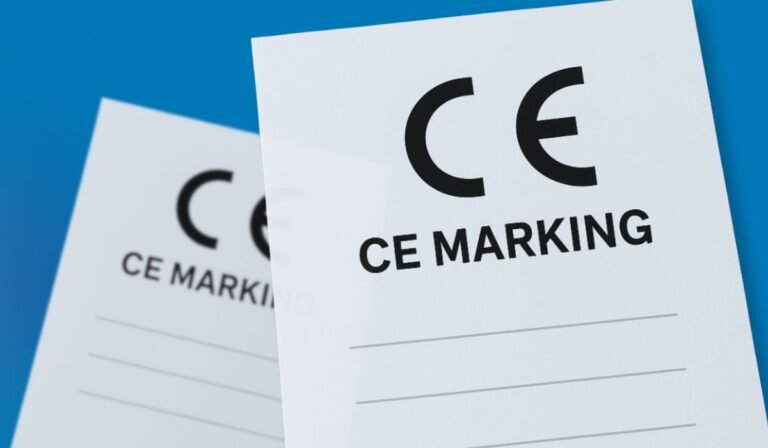
MDR CE Mark (or CE marking) is a mandatory symbol for many products commercialized within the European Union (EU) and the European Economic Area (EEA).
For medical devices, the MDR CE Mark demonstrates that the product complies with the legal requirements for safety, health protection, and performance established under European legislation—specifically Regulation (EU) 2017/745, known as the Medical Device Regulation (MDR).
The abbreviation “CE” comes from the French Conformité Européenne, meaning European Conformity.
More than a visual label, CE marking represents a formal declaration by the manufacturer confirming that the device meets all applicable regulatory requirements under European law.
Most importantly, without the MDR CE Mark, a medical device cannot be legally placed on the European market.
Characteristics of a Product with the MDR CE Mark
If you find a product displaying the CE Mark symbol on its label, it means that the device has undergone a defined conformity assessment process before being placed on the market.
In practice, a product bearing the MDR CE Mark typically presents the following characteristics:
- Allows placement on the European market without the need for multiple additional national approvals.
- Demonstrates compliance with intended-use safety requirements, an acceptable benefit–risk profile, and fulfillment of the General Safety and Performance Requirements (GSPR) established under the MDR.
- When applicable, has been assessed by a Notified Body, which issued a conformity certificate before the manufacturer affixed the CE Mark.
- Enhances market credibility, including in regions outside Europe, where CE marking is often recognized as an indicator of regulatory rigor and product quality.
- Confirms that the device meets European regulatory requirements related to safety and performance.
Medical Devices and the European Medical Device Regulation (MDR)

To understand how MDR CE Mark works in the medical device sector, it is essential to understand the European Medical Device Regulation (MDR).
Officially known as Regulation (EU) 2017/745, the MDR replaced the former Medical Device Directive (MDD) and became fully applicable in May 2021.
The primary objective of the MDR is to strengthen patient safety. As a result, it introduced higher expectations for manufacturers regarding responsibility, traceability, and transparency throughout the development, manufacturing, and commercialization of medical devices within the European Union.
The transition from the former Directive (MDD) to the MDR significantly impacted manufacturers, many of whom were required to update their processes, products, and technical documentation to meet the new regulatory framework.
Today, the future evolution of the MDR remains an active topic of discussion within the industry. Its implementation has reshaped the European medical device market, and some companies have delayed initiating certification projects due to concerns about timelines, resource availability, and the increasing complexity of compliance requirements.
What Does the MDR Require from Manufacturers?
The requirements introduced by the MDR are significantly more detailed and stringent than those established under previous directives. Key obligations for manufacturers seeking the MDR CE Mark include:
- Robust technical documentation, supported by scientific evidence demonstrating device safety and performance;
- Implementation of a Quality Management System (QMS), typically aligned with ISO 13485;
- Use of Unique Device Identification (UDI) to ensure traceability throughout the product lifecycle;
- A more rigorous clinical evaluation, particularly for higher-risk devices;
- Establishment of Post-Market Surveillance (PMS) activities and a Post-Market Clinical Follow-up (PMCF) plan;
- Appointment of a Person Responsible for Regulatory Compliance (PRRC), mandatory for most manufacturers under the MDR.
Where Do Notified Bodies Fit In?
As mentioned earlier, obtaining the MDR CE Mark often involves the participation of Notified Bodies.
Notified Bodies are independent conformity assessment organizations designated by European authorities to evaluate medical devices with higher risk classifications, such as Class IIa, IIb, and III devices.
These organizations conduct manufacturer audits, review technical documentation, and assess compliance with MDR requirements. When conformity is demonstrated, the Notified Body issues the relevant certification that allows the manufacturer to affix the CE Mark and place the device on the European market.
Steps in the MDR CE Mark Process for Medical Devices
Obtaining the MDR CE Mark for medical devices requires manufacturers to follow a well-defined — and often highly technical — regulatory pathway.
While the exact process depends on the device’s risk classification, several core steps apply to most cases.
Below is a clear overview of the main stages involved in achieving CE marking:
1. Correctly Classify the Device
The first step is to determine the device’s risk class according to Annex VIII of the MDR.
This classification defines whether conformity assessment may be performed through manufacturer self-declaration (for certain Class I devices) or whether the involvement of a Notified Body is required (Classes IIa, IIb, or III).
In simple terms: the higher the potential risk to patients or users, the more rigorous the conformity assessment process becomes.
Under the MDR, medical devices are divided into four primary risk classes:
- Class I (low risk): Includes simple, generally non-invasive products such as basic dressings, wheelchairs, and thermometers.
- Class IIa (moderate risk): Examples include dental equipment, infusion systems, and diagnostic ultrasound devices.
- Class IIb (high risk): Covers more complex devices such as ventilators, infusion pumps, and patient monitoring systems.
- Class III (highest risk): Includes high-risk devices such as cardiac prostheses, ophthalmic implants, and stents.
Accurate classification is critical because it determines the entire regulatory pathway toward obtaining the MDR CE Mark.
Tip: To reduce the risk of incorrect classification, many manufacturers rely on specialized regulatory experts. Sobel provides support from this very first step of the process.
2. Prepare the Technical Documentation
After defining the device’s risk classification, the next step is to prepare the technical documentation required for the MDR CE Mark process.
The specific documentation requirements vary depending on the device class. However, in general, manufacturers must compile and organize a comprehensive technical file that typically includes:
- Product description and its components;
- Technical specifications and manufacturing methods;
- Risk assessment and risk management activities;
- Clinical evidence (such as clinical studies, scientific literature, or clinical investigations);
- Information related to device performance and intended use.
All these elements form the technical documentation dossier, which serves as the foundation for review by the Notified Body, when applicable.
3. Perform the Conformity Assessment
At this stage, the manufacturer must demonstrate that the device complies with the General Safety and Performance Requirements (GSPR) established under the MDR.
Once again, the device’s risk class determines how the process will be conducted.
For Class I (low-risk) devices, manufacturers may perform a self-assessment and issue a Declaration of Conformity independently, provided the device does not fall into special categories requiring Notified Body involvement.
For Class IIa, IIb, and III devices, a Notified Body designated under the MDR must audit the manufacturer’s Quality Management System and review the complete technical documentation.
If compliance is confirmed, the Notified Body issues a CE conformity certificate, enabling the manufacturer to proceed toward affixing the MDR CE Mark.
4. Affix the CE Mark to the Product
Once approval is obtained, the manufacturer may affix the CE symbol to the device, its packaging, and/or the instructions for use.
When a Notified Body is involved, its identification number must appear alongside the CE Mark (for example: CE 2797).
In other words, manufacturers cannot simply download the CE logo from the internet and place it on a product label. CE marking is fully traceable, and making a false conformity claim can lead to serious regulatory consequences, including market withdrawal and enforcement actions.
5. Maintain Post-Certification Compliance
Many manufacturers are unaware that the MDR CE Mark is not permanent. Certificates have a limited validity period (typically up to five years) and require continuous regulatory oversight.
To maintain compliance, manufacturers must implement ongoing Post-Market Surveillance (PMS) activities; Keep technical documentation updated; Conduct Post-Market Clinical Follow-up (PMCF) when applicable; Participate in periodic certificate renewal processes; Remain prepared for regular audits conducted by the Notified Body.
Important tip: Many manufacturers — especially those new to the European market — rely on specialized regulatory consultancies to organize documentation and manage interactions with Notified Bodies. Expert support can significantly accelerate the process and help avoid costly rework.
For manufacturers located outside the European Union, appointing a European Authorized Representative (EAR) is also mandatory. This representative acts as the official regulatory liaison with European competent authorities.
How to Prepare and Avoid Common Mistakes
Obtaining the MDR CE Mark for medical devices may seem challenging at first.
The process requires technical preparation, strong organization, and careful attention to regulatory details.

However, with the right strategy and planning, manufacturers can successfully navigate the pathway to CE marking with confidence.
Below are practical recommendations to help manufacturers prepare effectively and avoid common mistakes during the certification process.
1. Start with the Basics: Understand the MDR
Before beginning the process, it is essential that you — or your regulatory team — fully understand the principles and requirements of the Medical Device Regulation (MDR).
The MDR forms the foundation of the entire MDR CE Mark process. Many regulatory challenges arise from misunderstanding the legislation or relying on outdated information from the former Medical Device Directive (MDD).
For this reason, manufacturers should carefully review key MDR annexes, particularly: Annex VIII (Device classification rules), Annex II (Technical documentation requirements) and Annex III (Post-market surveillance documentation).
2. Organize Technical Documentation from the Start
Avoid leaving the preparation of technical documentation until the final stages of development.
Throughout the product lifecycle, manufacturers should continuously document testing activities, risk analyses, clinical justifications, and evidence demonstrating conformity with harmonized standards.
Incomplete or poorly organized documentation remains one of the most common reasons for delays or non-conformities identified by Notified Bodies.
3. Choose Your Notified Body Carefully
If your device requires assessment by a Notified Body, it is important to dedicate time to selecting an organization that is properly designated and experienced with your specific type of device.
Not all Notified Bodies are authorized for every device category, and many currently face significant review backlogs.
Tip: Verify each organization’s designation scope through the European Commission’s official NANDO database.
4. Establish a Realistic Timeline
The MDR CE Mark process can take anywhere from several months to more than a year, depending on factors such as device classification, documentation quality, and Notified Body availability.
Plan your regulatory timeline with a safety margin — especially if your commercial strategy depends on timely entry into the European market.
5. Consider External Regulatory Support
If your company does not have an internal regulatory team experienced with European requirements, working with a specialized regulatory consultancy can be a strategic decision.
Qualified experts can support device classification activities, preparation or review of technical documentation, communication management with the Notified Body, and alignment with applicable standards such as ISO 13485 and ISO 14971.
Investing in expert support early in the process often accelerates preparation and helps avoid costly delays or rework.
Ready for MDR CE Mark Certification?
The MDR CE Mark is an essential requirement for manufacturers aiming to commercialize medical devices in the European Union.
More than a visual symbol placed on product packaging, CE marking represents compliance with strict European standards for safety, performance, and quality established under the Medical Device Regulation (MDR).
Keep in mind that each stage of the process requires organization, clarity, and a strong commitment to regulatory compliance.
If your company is preparing to expand into the European market, you now have a complete overview of how MDR CE Mark certification works and the key considerations for success.
With the right preparation and regulatory strategy, entering the European market can be safe, efficient, and strategically successful.