The regulatory environment for medical devices has undergone significant adjustments across different markets. Amid this scenario, increasing attention is being given to approaches that allow regulatory authorities to rely on assessments already performed by trusted reference authorities, without relinquishing local regulatory responsibility — known as regulatory reliance.
Recent actions by IMDRF, the FDA, Anvisa, and Asian regulators show this approach gaining traction in global regulatory discussions.
In a constantly evolving sector, keeping track of these initiatives is essential to align regulatory strategies, anticipate impacts, and reduce uncertainty.
Below are the main regulatory developments from recent weeks.
Tip: Those who subscribe to Sobel News Round Up, our free newsletter, already know all this — because they receive the information first. Subscribe and stay ahead!
IMDRF and Regulatory Reliance
First, it is important to understand the concept of regulatory reliance.
Regulatory reliance is the practice by which a regulatory authority considers and uses, in whole or in part, assessments conducted by other trusted regulatory authorities, while still retaining responsibility for the final decision within its own jurisdiction.
This approach aims to avoid duplication of regulatory efforts, promote more efficient use of resources, and accelerate review processes, without compromising product safety, effectiveness, or performance.
Regulatory reliance can take different forms, such as abbreviated reviews, recognition of foreign regulatory decisions, or work‑sharing models between authorities.
Although the concept is not new, its adoption has gained momentum in recent years due to the increasing technological complexity of medical devices.
But where does the IMDRF fit into this?
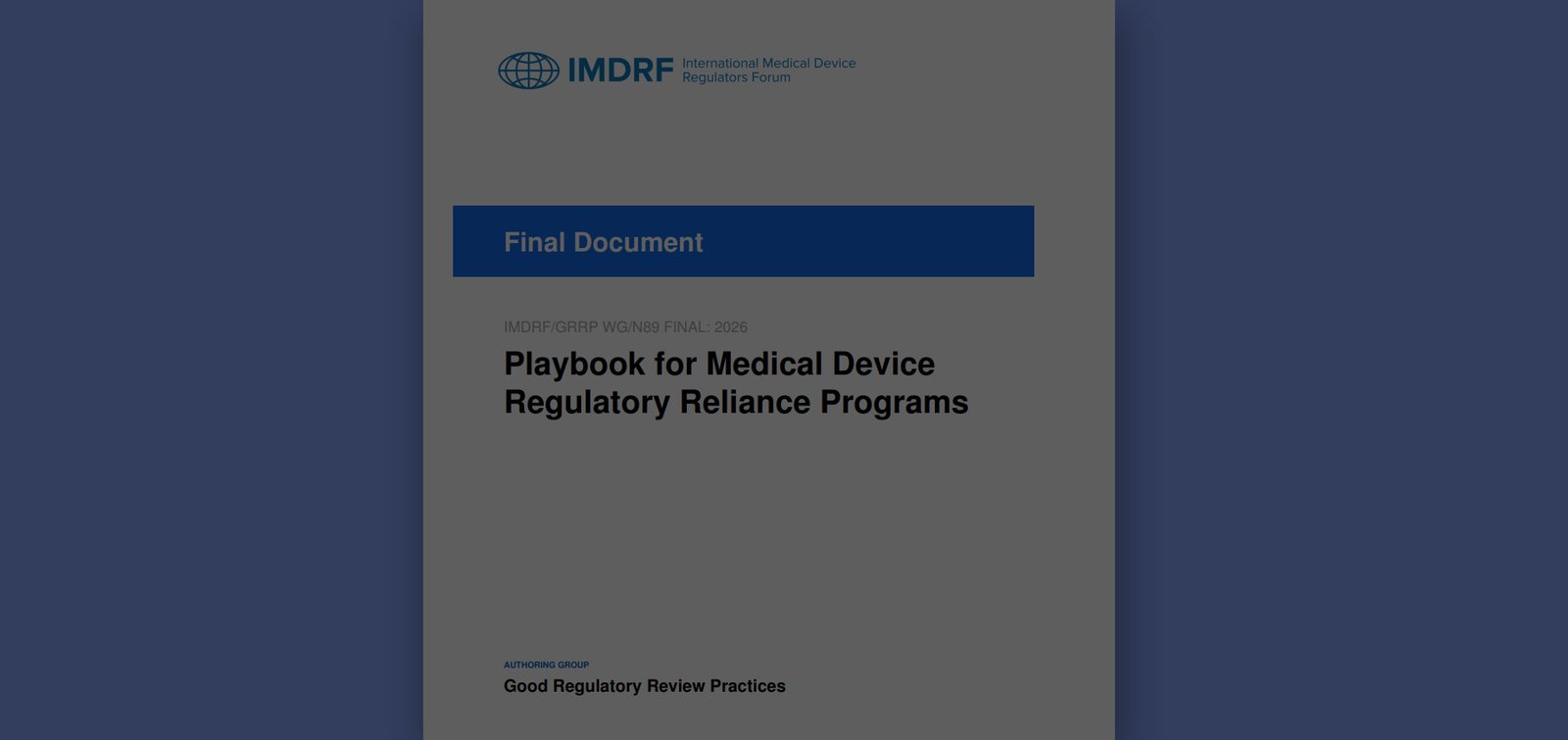
In late February 2026, the IMDRF (International Medical Device Regulators Forum) published the Playbook for Medical Device Regulatory Reliance Programs.
This document provides practical guidance for regulatory authorities interested in developing or enhancing formal regulatory reliance programs for medical devices and in vitro diagnostics.
Developed by the Good Regulatory Review Practices (GRRP) Working Group, the playbook consolidates definitions, presents examples of existing models, and outlines practical steps for implementing programs based on regulatory reliance, while consistently reinforcing regulatory independence and decision‑making accountability.
For manufacturers, this represents a meaningful shift in the regulatory landscape, with potential impacts on approval timelines, submission strategies, and market prioritization.
Regulatory updates reinforcing the global trend
In addition to the IMDRF initiative, other recent developments further reinforce the pursuit of greater regulatory efficiency and predictability.
Core functions and priorities at the FDA
In the United States, the FDA confirmed that the core functions and priorities of its inspection program remain unchanged, despite recent leadership changes.
The agency will continue to focus on risk‑based inspections, pre‑approval inspections, and surveillance activities, including inspections at international facilities.

This position reinforces the importance of robust quality systems and a continuous compliance posture for companies operating in the market.
UDI system goes live in Brazil
In Brazil, Anvisa has launched the Unique Medical Device Identification System (Siud), aligned with IMDRF guidelines.
The initiative strengthens traceability and post‑market surveillance, bringing the country closer to internationally adopted regulatory practices and increasing transparency across the supply chain.
Malaysia updates rules for medical device purchases
In Asia, Malaysia’s regulatory authority published new rules governing the acquisition of medical devices by hospitals and healthcare institutions.
The regulations clarify that suppliers involved in public or private purchasing processes must fully comply with local regulatory requirements, including appropriate licensing, reinforcing the role of regulation in commercialization activities.
Regulatory monitoring as a competitive advantage
Recent initiatives by the IMDRF, FDA, Anvisa, and Asian regulatory authorities clearly show that the global regulatory environment is in constant transformation.
For medical device companies, monitoring these changes should not be viewed solely as a compliance obligation, but as a strategic tool.
Understanding how concepts such as regulatory reliance are being incorporated into regulatory frameworks can help companies anticipate scenarios, reduce risks, optimize investments, and make more informed decisions about international expansion.
That is why staying informed about these developments can make all the difference in your next regulatory strategy.
And remember: the Sobel team is available to guide you through global regulatory journeys!